Skip to content

“We were so glad that we did this.” – Lynne, homeowner in Freeport, ME
Jump to: The problem | What we did | The results | Free consultation
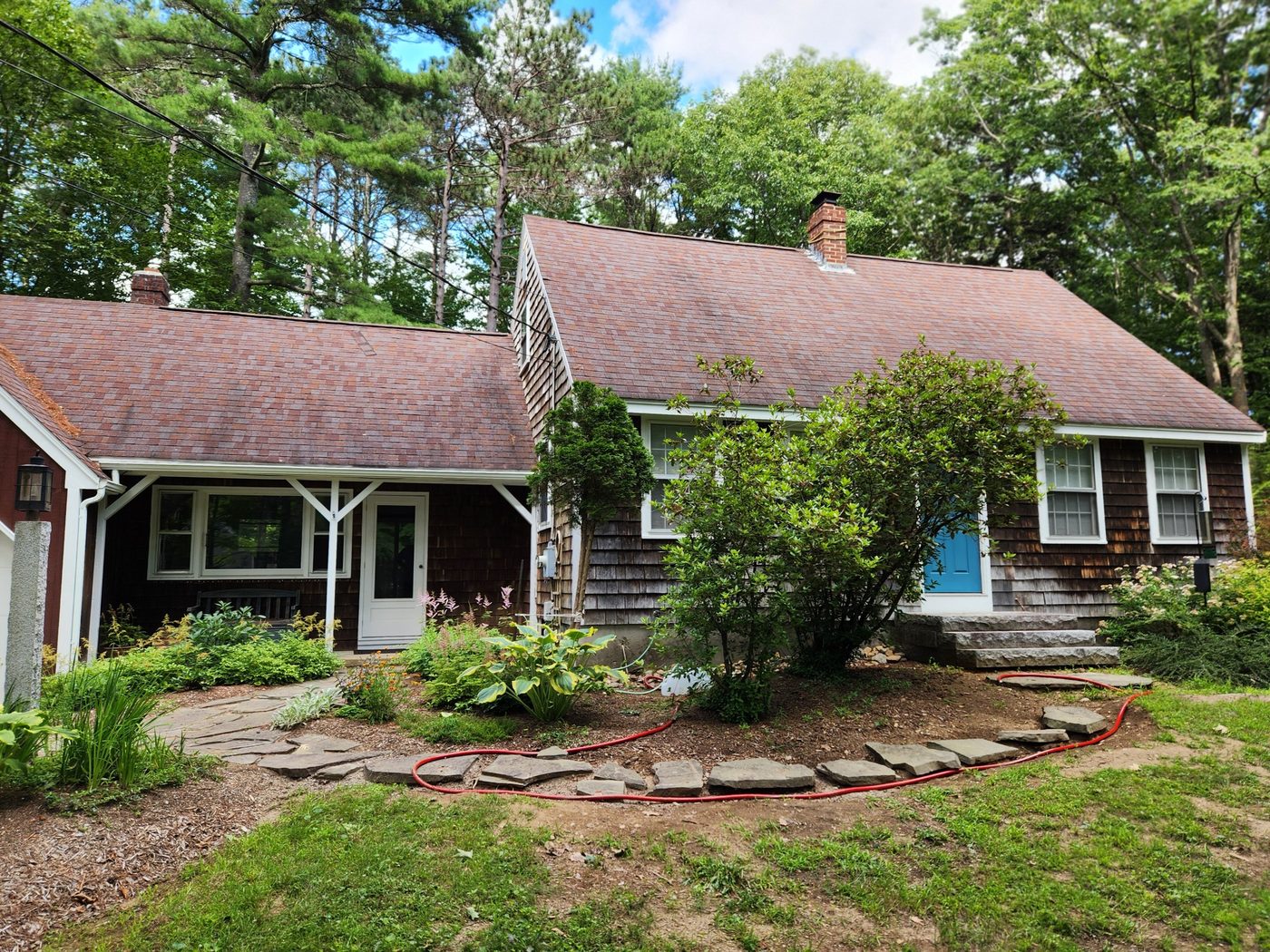
Summers in Freeport kept getting hotter, so Lynne and her husband put in heat pumps. While the installer checked the electrical panel in the basement, he pointed out that the new system would do more with insulation along the rim joists and basement walls.
He had seen it work in a home about the same size, one his daughter had just bought. When Lynne asked who he would call, the answer was short. Evergreen.
The short version
- Air leakage dropped about 19%, from 3,130 to 2,530 CFM50
- The damp basement walls cleared up, even through a hot, humid summer
- The house holds its heat better, including an upstairs bedroom that used to run cold
The problem: a leaky basement, damp walls

Lynne never dealt with flooding or standing water. What she did get was moisture on the basement walls in hot, humid weather, enough that her husband would set up a fan. Their heat pump water heater helped, but the moisture still showed up.
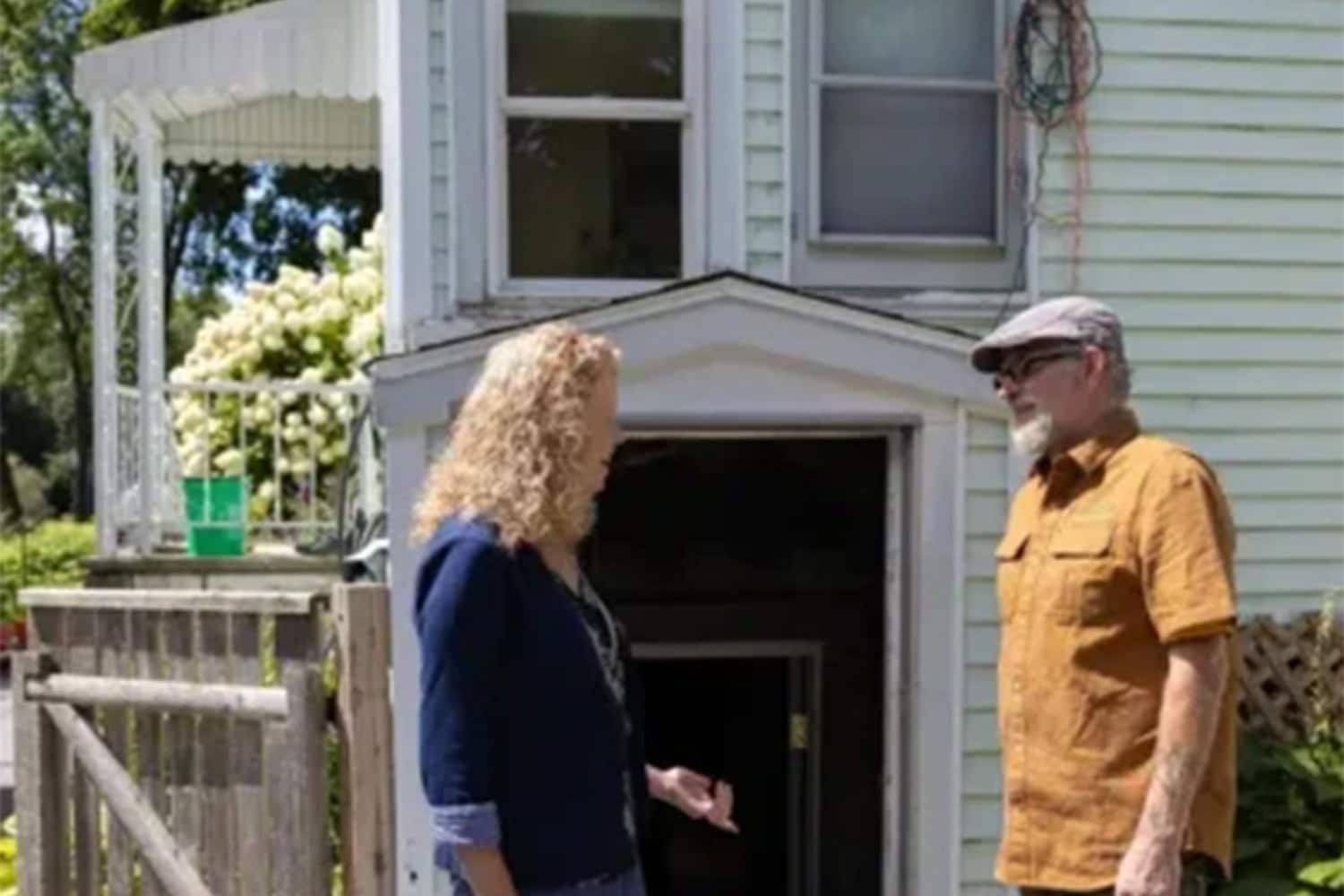
The basement door also leaked a lot. An Evergreen advisor came out, explained the Efficiency Maine rebates clearly, and never pushed. Everyone she dealt with “took their time with us” and “made sure all our questions were answered.”

What we did: the rim first, then the walls
Rim joists and foundation walls
The crew started at the rim joists, where the framing meets the foundation and cold air finds its way in. They removed the old fiberglass, air sealed the cavities, and filled them with dense-pack cellulose behind a membrane to bring the rim up to about R-30.
From there, they covered the foundation walls about four feet down with foil-faced rigid foam. Next to the electrical panel and the chimney, they used mineral wool, which stands up to heat.

Lynne almost stopped at rim joist insulation. “We almost just did the joist, but I talked my husband into the walls, too,” she said, “and we’re really glad about that.”

The chimney and the basement door
Where the chimney passes through the floor framing, the crew sealed the gap with sheet metal and fire-rated caulk. It is an easy place for air to leak, and one that calls for fire-safe materials.


The basement door was the other big leak. The crew weatherstripped it and fitted it with foam board. Lynne’s verdict: “it’s great.”

When the unexpected came up
Right at the end, while the crew was vacuuming up, they hit a valve on the water heater. Lynne put it at about 10 gallons of water, “all over the basement just when they were done.”
Evergreen was back with a dehumidifier and took care of the cleanup. Lynne had a plumber redo the valve and someone out to help dry the basement, “but they paid for all of it.” She said her advisor and the project manager both stayed in close touch until it was sorted out.
Older Maine homes are full of surprises, and sometimes the unexpected comes up. When it does, we will never leave you in the lurch. We will do whatever we can to make it right.
Richard Burbank, owner, Evergreen Home Performance

The results: a drier basement, a warmer house
Evergreen’s post-project blower door test measured the home’s air leakage at 2,530 CFM50, down from 3,130 CFM50 before the project. That is 19% less air leaking through the house.
The moisture is gone, too. Lynne’s advisor was upfront that he could not promise a result, but he thought she would see an improvement. Then came a hot, humid summer. “Our basement was perfect,” she said. “There’s no moisture buildup.”
The biggest change showed up in winter. “We were noticing how much warmer the house felt,” Lynne said. The upstairs bedroom, which has its own heat pump, used to run cold. She and her husband are sleeping better.
The room where she does her consulting work was always cold in winter. She credits the heat pump and the insulation together: “It’s been so comfortable between the heat pump and the insulation underneath us. It’s been fantastic.”
Most Maine homeowners want the same thing: a house that feels good in January and still feels good in August. New equipment helps, but it works best in a house that holds on to the air it has already heated or cooled. The basement is one of the easiest places to start.
Richard Burbank, owner, Evergreen Home Performance
The crew worked three or four long days straight. “They worked so hard,” Lynne said. “Evergreen was responsive every step of the way. And we really appreciated that.”
“It was so beautifully done, so professionally installed,” she said. For anyone weighing the cost and wondering whether it is worth it, her answer is short: “It’s worth it.”

Your Maine home deserves the same attention
If your house never seems to hold the comfort you are paying for, the cause is often somewhere you cannot see, like a basement or a rim joist. An energy audit can find out exactly where, and a good plan fixes the cause instead of guessing.
Call 207-594-2244 or reach out to schedule your free consultation.
Evergreen Home Performance proudly serves homeowners in Freeport, Portland, and communities across Southern and Midcoast Maine with professional insulation, attic insulation, air sealing, and energy audits.
- Town: Freeport, ME
- Year of upgrades: 2025
- Primary concerns: Getting more out of new heat pumps, moisture on the basement walls in humid weather, and a leaky basement door
- Solutions: Rim joist air sealing and dense-pack cellulose, rigid foam down the basement walls, chimney chase air sealing, basement door weatherstripping and insulation
- Rebates: Efficiency Maine any-income insulation rebate applied