Skip to content

“It’s cozy. I feel much more comfortable.” – Susan, homeowner in Gray, ME
Susan has lived in her Gray home for six years. Over time, a couple of additions were built onto the house, and one of them became her home office. It was also, consistently, the coldest room in the house.
In winter, working from that room meant space heaters, sweaters, and a steady supply of tea. “It was brutal,” she said.
The problem: heat loss hiding where you can’t see it

Susan reached out to Evergreen for a home energy consultation, curious about why the addition never seemed to hold heat no matter what she tried.
The visit started the way it always does: a walk through the home from basement to attic, looking for where heat was actually escaping rather than guessing.
The audit found real heat loss at the ceiling. “I have high ceilings,” Susan said. “My ceilings are everything.” But the floor beneath her home office, open to an unconditioned crawl space below, was losing heat just as badly, and it was a much more practical place to start.
Rather than recommend everything the audit turned up, the plan focused on the areas driving the most discomfort for the least disruption to her home: the basement and the crawl space under the addition.

What we did: starting at the source, not the symptom
Basement insulation and pipe wrapping
The team built a barrier between the inside of the basement and the outside cold, insulating the sills and foundation walls with rigid foam panels and sealing the rim joist tight. They also wrapped the home’s hot water pipes, both the domestic lines and the hydronic heating lines that carry hot water out to the radiators.
Wrapping the pipes matters more than it sounds like it should. Every foot of uninsulated pipe between the boiler and a radiator is a foot where that water cools down before it ever reaches the room it’s supposed to heat. Wrapping the lines keeps more of that heat where it’s headed.

Crawl space floor insulation under the addition
Under Susan’s home office, the crew removed the old insulation, sealed the space with an air and vapor barrier, and filled the cavities with dense-pack cellulose to bring the floor up to a real R-value instead of leaving it essentially open to the outside.

Adjusting the plan without cutting corners
The original plan called for cutting a small access panel through the exterior foam and stucco to reach the crawl space from outside, then patching it back up when the work was done.
Partway through the project, the crew found a better way in: a small basement window that led directly to the same space. Using it meant no cutting into the stucco and no patch job to match afterward. It also meant a lower price. Evergreen and Susan signed a change order reflecting the savings before any work on that section began.
It’s a small adjustment, but it’s the kind of thing that only happens when a crew is looking for the best way to do the job, not just the fastest way to bill it.

The results: no more space heaters
After the work, a blower door test measured the home’s air leakage at 3,600 CFM50, down from 4,000 CFM50 before the project, a 10 percent reduction. That’s on top of the direct effect of insulating a floor and a set of pipes that had been losing heat for years.
For Susan, the difference shows up in how the room actually feels. “It’s cozy,” she said. “I feel much more comfortable.” The space heaters, sweaters, and tea are no longer a daily requirement for getting through a workday in that room.
The high, exposed ceilings that were also losing heat are still on the table for a future project. Susan didn’t want to disturb them for this round of work, and that was fine. Evergreen’s approach is to fix what needs fixing now and be honest about what can wait, not to push a homeowner into more than she asked for.
What Susan says about the crew
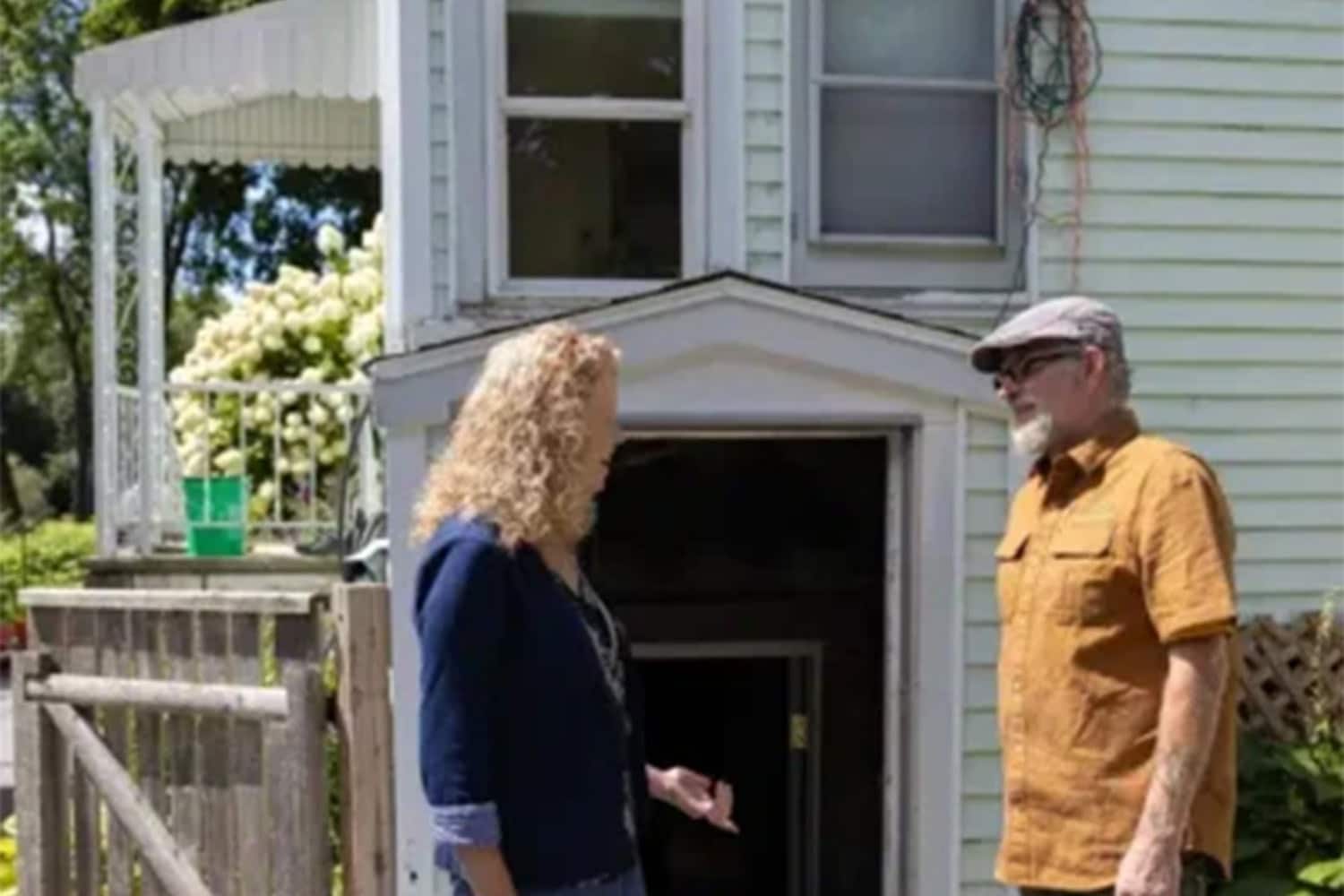
Access to Susan’s basement runs under her front porch, which meant the crew had to remove a set of slats each morning to get underneath and reinstall them each evening before they left. They did it every day of the project without being asked twice.
“The workers were top notch,” Susan said. “Very professional and attentive.” She noted they’d give her a heads up any time a part of the job was going to be loud, out of consideration for her working from home upstairs. The project took about a week.

Your Maine home deserves the same attention
If part of your home never seems to hold heat the way the rest of it does, the cause is often somewhere you can’t see: a basement, a crawl space, an uninsulated pipe run. A whole-home energy consultation can find out exactly where, and a good plan fixes what’s actually driving the problem instead of guessing.
Schedule your free consultation or call 207-594-2244 to get started.
Evergreen Home Performance proudly serves homeowners in Gray, Portland, and communities across Southern and Midcoast Maine with professional insulation, air sealing, and energy-efficiency upgrades.
- Town: Gray, ME
- Primary concerns: A home office addition that stayed cold no matter what, heat loss through the basement and an uninsulated crawl space floor
- Solutions: Basement insulation, pipe insulation, crawl space floor insulation with dense-pack cellulose
- Rebates: Efficiency Maine insulation rebate applied