Attic insulation in Maine typically costs $6,000 to $13,000 for most homes, before Efficiency Maine rebates. After rebates, many homeowners pay significantly less, and some projects, particularly for lower-income households, can be fully covered. The exact cost depends on your attic size, current insulation levels, how much air sealing is needed, and the type of attic you have. Homes built before 1980, which is most of the homes we work in, typically require more care and more material to do the job right.
Since 2006, Evergreen Home Performance has helped more than 5,000 Maine homeowners improve their homes, and processed more Efficiency Maine rebates than any other insulation contractor in the state last year. We know what projects actually cost in Maine, and we handle all the rebate paperwork so you don’t have to.
Table of contents
- What most Maine attics are starting from
- How much does attic insulation cost in Maine?
- What affects the cost?
- What R-value means for your home
- What materials we use and why
- Efficiency Maine rebates: the real math
- FAQ
What most Maine attics are starting from
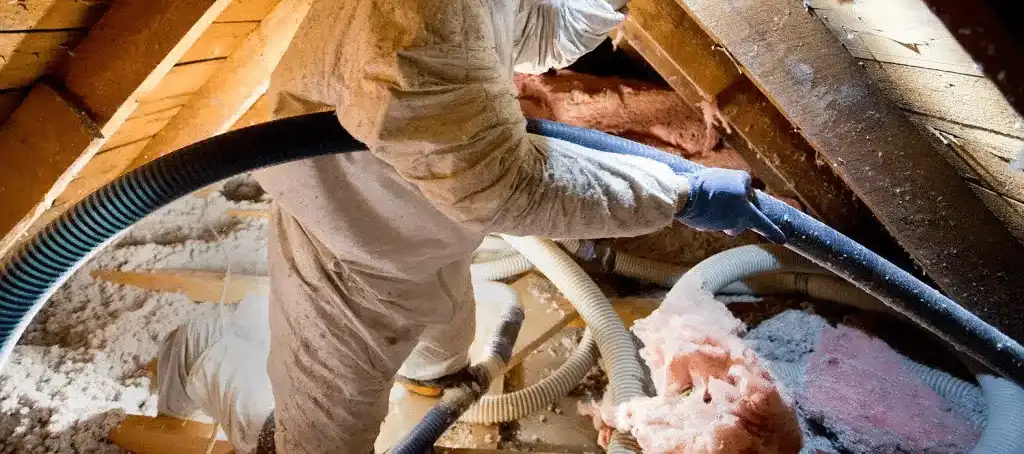
Most of the homes we work in were built between 1900 and 1960. That era comes with a specific set of attic problems.
Most homeowners think they’re fine. Three or four inches of original fiberglass. Some loose fill that’s been compressing for decades. That’s typically R-11 to R-19. The target for a Maine attic is R-60.
Older homes also have more air leakage paths than newer construction:
- Plumbing chases and wiring penetrations
- Open stud cavities at the ceiling
- Balloon framing that connects wall cavities directly to the attic
Warm air rises through all of it. That’s heat you’ve already paid for, and it’s usually why some rooms stay cold no matter how high the thermostat goes.
How much does attic insulation cost in Maine?
Here’s a straightforward way to think about pricing for the types of homes we work in.
| Project Type | Typical Cost Range | Best For | What’s Included |
|---|---|---|---|
| Standard vented attic – basic | $5,500 – $7,500 | Smaller homes, under 1,000 sq ft of attic | Air sealing, blown cellulose to R-60 |
| Standard vented attic – typical | $7,500 – $10,500 | Most Maine homes, 1,000–1,500 sq ft attic | Air sealing, blown cellulose to R-60 |
| Standard vented attic – larger home | $9,000 – $13,000 | Larger homes, over 1,500 sq ft attic | Air sealing, blown cellulose to R-60 |
| Side attic insulation | $6,000 – $10,000 | Cape-style homes with knee walls | Dense-pack cellulose in sloped rafter cavities |
| Finished roof slope / cathedral ceiling | $8,000 – $13,000+ | Homes with vaulted or cathedral ceilings | Dense-pack cellulose in sloped roof cavities |
| Unvented attic conversion | $13,000 – $20,000+ | Converting attic to conditioned space | Airtight membrane plus dense-pack or targeted spray foam |
These are real-world Maine numbers. Efficiency Maine rebates, covered below, can bring your out-of-pocket cost down significantly.
Pricing note: The ranges above are typical for the types of homes we work in, but they are not a commitment or guarantee of project cost. Every home is different, and your project may vary from what’s described here. For an accurate estimate, give us a call at 207-594-2244 or schedule a free consultation.
What affects the cost
Most of the variation comes down to five things.
1. Current insulation levels. The further you are from R-60, the more material you need. More material means higher cost, but also a bigger improvement in comfort.
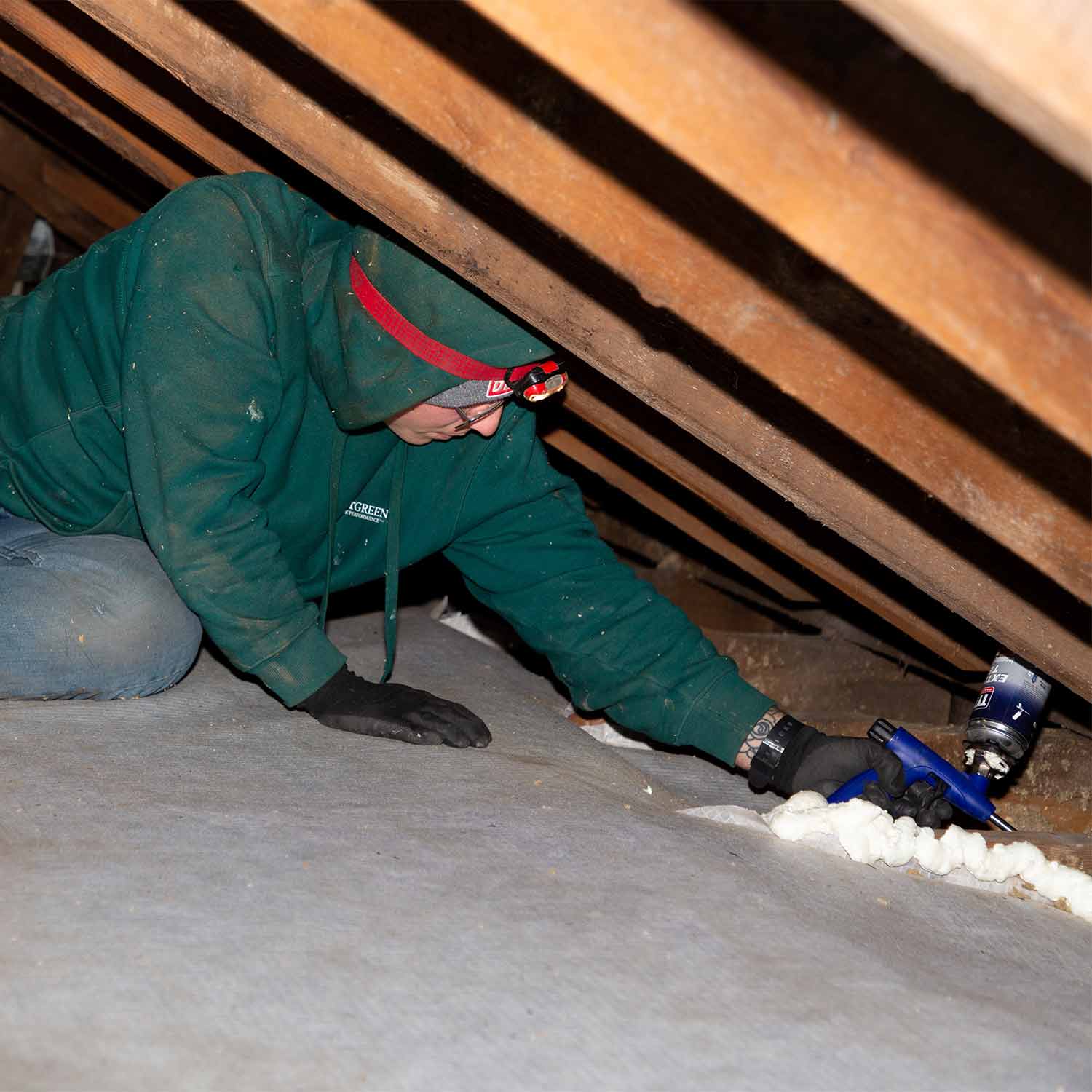
2. Air sealing needs. Before adding insulation, we seal every gap where air moves between the living space and the attic: plumbing chases, wiring holes, attic hatches, chimney bypasses. Skipping this step is the main reason DIY projects fail to deliver real results. In older homes with balloon framing or complicated ceiling geometry, this takes more time.
3. Attic size and access. Tight spaces, low clearances, and cluttered attics add installation time. Cape-style homes with knee walls and side attic cavities are more involved than a simple open attic floor.
4. Type of attic assembly. A standard vented attic is the most straightforward project. Side attics, cathedral ceiling sections, and unvented attics require different approaches that cost more in both materials and labor.
5. Whether old insulation needs to come out. Not always necessary. But if the existing insulation is damaged or contaminated, removal is the right call. We assess this during the consultation.
What R-value means for your home
R-value measures how well insulation resists heat flow. Higher number, better performance.
In Maine’s climate, the target for an attic floor is R-60. Here’s what that looks like:
- R-60 is roughly 18 to 20 inches of blown cellulose
- Most older Maine homes we walk into are at R-11 to R-19
- That gap is where a significant portion of your heating bill goes every winter
R-value tells you what the material does in ideal conditions. It doesn’t account for installation quality, unaddressed air bypasses, or ventilation. A properly installed R-60 attic outperforms a careless one at the same number every time.
This is why we include air sealing in every project. Insulation on top of unaddressed bypasses doesn’t perform to its rating. It’s one of the most common reasons we hear: “We had insulation added a few years ago and it didn’t seem to make a difference.”
| Material | R-value per inch | Typical use in Maine attics |
|---|---|---|
| Blown cellulose | ~3.5 – 3.8 | Vented attic floors; our primary recommendation |
| Dense-pack cellulose | ~3.5 – 3.8 | Side attics, cathedral ceilings, rafter cavities |
| Blown fiberglass | ~2.2 – 2.7 | Common in older installs; we typically use cellulose |
| Closed-cell spray foam | ~6.0 – 7.0 | Rim joists, foundation walls; not for open attic floors |
What materials we use and why
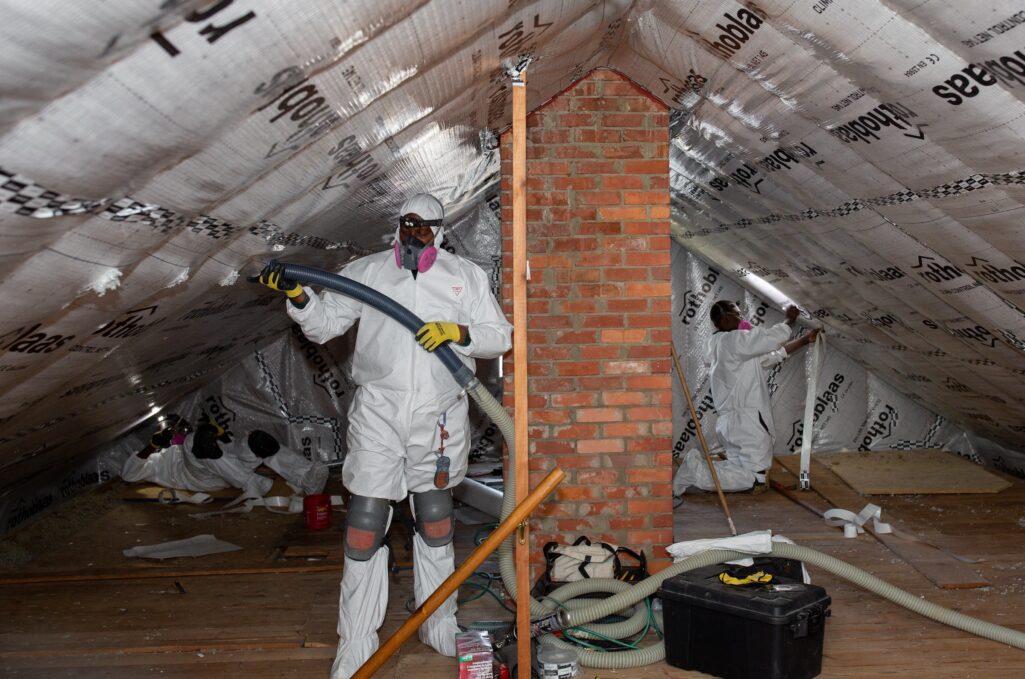
For most Maine attic projects, we use cellulose. Blown cellulose for vented attic floors. Dense-pack cellulose for enclosed rafter cavities and side attics.
Why cellulose over fiberglass?
- Fills irregular framing and gaps better (older homes don’t have uniform stud bays)
- Settles very little when properly installed
- Performs well in cold climates
- Made from recycled materials
What about spray foam? We use closed-cell spray foam for targeted applications: rim joists, foundation walls, and specific air leakage points. For an open attic floor, it’s the wrong tool. It costs far more per square foot, and the depth advantage doesn’t matter when you have a full attic floor to fill.
For unvented attic conversions or complex assemblies, we may include spray foam in specific locations. That’s a different conversation than a standard attic upgrade, and we’ll walk you through the reasoning.
Efficiency Maine rebates: the real math
Every Maine homeowner qualifies for a rebate. The amount depends on your household income, but there is no tier that pays nothing.
Efficiency Maine’s weatherization rebates cover insulation and air sealing work. Here’s how the three tiers break down:
| Income tier | Who qualifies | Rebate |
|---|---|---|
| Any income | All Maine ratepayers, no verification needed | 40% of project cost, up to $4,000 |
| Moderate income | AGI under $70K (single) or $100K (married filing jointly) | Up to $6,000 |
| Low income | HEAP, SNAP, TANF, or income-based MaineCare | Up to $8,000 |
The moderate income tier covers a broad range of Maine households. If you’re unsure which tier applies to you, we figure that out during the free consultation before you commit to anything.
Here’s what the math looks like at each tier for a typical attic insulation project:
| Project cost | Income tier | Rebate | Net out-of-pocket |
|---|---|---|---|
| $9,000 | Any income | $3,600 | $5,400 |
| $9,000 | Moderate income | $6,000 | $3,000 |
| $10,500 | Any income | $4,000 | $6,500 |
| $10,500 | Moderate income | $6,000 | $4,500 |
One more thing worth knowing: the federal 25C energy efficiency tax credit expired at the end of 2025 and is no longer available. Efficiency Maine rebates are the primary financial incentive for insulation projects in 2026, and the program is fully funded.
Evergreen handles the entire rebate process. The blower door test required to qualify, the application, the paperwork, and the submission. You pay the net cost. We collect the rebate from Efficiency Maine.
For homeowners who want to spread the remaining cost over time, Green Bank financing is available. [Flag for Richard: get a current payment example at these net cost levels before publishing.]
Rebate amounts can change. Confirm the current program details during your consultation.
“Most people don’t realize how much of their heating bill is going straight up through the attic. They’ll have some insulation up there, maybe a few inches of old fiberglass, and assume they’re covered. When we do the energy audit and run the blower door, the numbers tell a different story. After we do the air sealing and get the insulation to where it should be, people notice within a few days. Floors are warmer. The house holds temperature better. The heating system isn’t cycling as often.”
Richard Burbank, Owner, Evergreen Home Performance
FAQ
How much does attic insulation cost in Maine?
For most homes, between $6,000 and $13,000 before rebates. The range reflects attic size, air sealing needs, and assembly type. Efficiency Maine rebates can bring that number down significantly, sometimes to near zero for qualifying households. The only way to get an accurate number is a free in-person consultation.
What R-value do I need for my attic in Maine?
R-60. Most older Maine homes are at R-11 to R-19. At R-60, you’re looking at roughly 18 to 20 inches of blown cellulose. Air sealing has to come first, or the insulation can’t perform to its rating.
Is spray foam the best insulation for a Maine attic?
Not for a standard vented attic floor. Blown cellulose fills irregular framing better, costs less, and performs very well in cold climates. Spray foam makes sense for rim joists, foundation walls, and tight enclosed cavities where depth is limited. At Evergreen, we recommend the material that fits your attic, not the most expensive option.
Do I need to remove old insulation before adding new?
Usually not. We add new blown cellulose on top of existing insulation after sealing the air bypasses. Removal is only necessary if the existing material is damaged or contaminated. We assess this during the consultation.
How long does attic insulation last?
Blown cellulose lasts the life of the home. It settles slightly in the first year, then stabilizes. Dense-pack cellulose in enclosed cavities is effectively permanent. No off-gassing, no compression over time, no need for replacement.
Does attic insulation reduce ice dams?
Yes, in most cases. Ice dams form when heat escaping through the attic melts roof snow, which refreezes at the eaves. Sealing the air bypasses and getting to the right insulation depth cuts off that heat loss. It’s the most reliable fix for recurring ice dam problems in Maine homes. Ventilation and roof geometry can also play a role, but this addresses the root cause in the majority of cases.
Why does air sealing matter so much?
Because insulation alone doesn’t stop air movement. Warm air flows through gaps around wiring, plumbing, attic hatches, and framing connections. If those gaps aren’t sealed before insulation is added, the heat loss continues regardless of how much material is on the floor. It’s the most commonly skipped step, and the most commonly regretted one.
Ready to find out what’s actually going on in your basement? A free walkthrough is the fastest way to get a real answer.
Get a Free ConsultationThe best way to find out what your project will cost
Every attic is different. The only way to get a real number is to look at the space.
During a free consultation, we:
- Walk through your attic and assess current insulation levels
- Identify air leakage paths
- Give you a clear recommendation and an honest price
If the project qualifies for Efficiency Maine rebates, we tell you upfront and handle all the paperwork.
Since 2006, Evergreen has helped more than 4,500 Maine homeowners with insulation, air sealing, and basement improvements. We don’t upsell work your home doesn’t need. If we’re not the right fit, we’ll tell you that too.